| |
| Wednesday, 28 October 2026 |
| The Extraordinary and Outlandish Royal Pavilion |
| Patrick Conner |
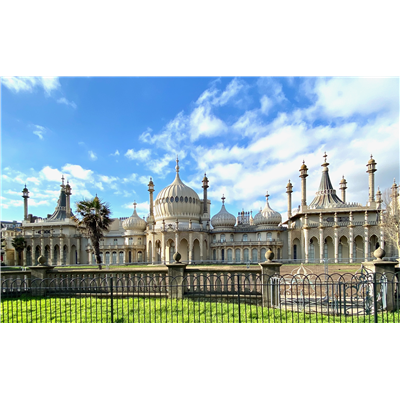 |
How could such a creation have been built in England? The answers lie partly in the 18th century fashion for chinoiserie, partly in the travel of British artists to India and China and partly in the extrovert personality of the Prince Regent - later King George IV. As a royal residence the Pavilion enjoyed musical evenings, lavish banquets and high-tech kitchens. In 1850 it faced destruction but was rescued by the townspeople of Brighton; in 1914-16 it was used as an Indian military hospital; in 1975 it survived an arson attack. Since then it has been restored to the magnificently exotic palace that we see today. |
|
| Wednesday, 25 November 2026 |
| Art with Attitude: The Banksy Effect |
| Mariska Beekenkamp-Wladimiroff |
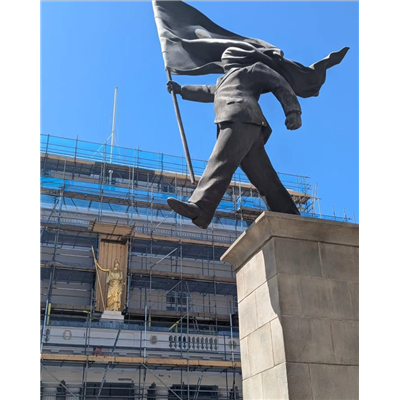 |
Alongside his street art, Banksy has been creating works for sale for more than 20 years. This British contemporary artist might seem like a graffiti artist living for a laugh and a headline, but the artworld has caught up with his popular appeal, and Banksy has properly earned his place in art history. Truly independent, highly socially involved, and with a dry British wit, it is time to introduce the artist and his work. |
|
| Wednesday, 27 January 2027 |
| Threads of History - The World of the Bayeux Tapestry |
| Rupert Willoughby |
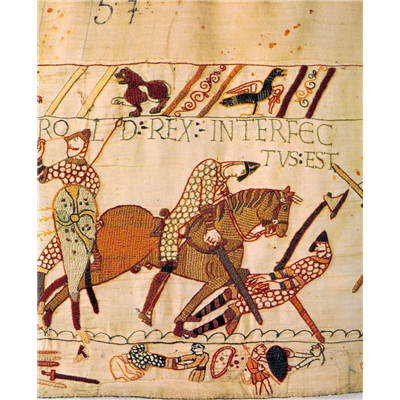 |
In this introduction to the tapestry - so much more than the story of Hastings - some of its mysteries are unravelled, it’s placed in the context of its age and firmly established as a landmark in the history of Western art. Commissioned by the Bishop of Bayeux who fought at Hastings, executed by skilled English craftsmen, the Bayeux Tapestry is the last survivor of a vanished art form. With its lively illustrations of languid, party-loving, moustachioed Englishmen, of the cavalcades of noble huntsmen and the snorting Norman cavalry poised to charge into battle, the Tapestry is the next best thing to a moving picture from the time. |
|
| Wednesday, 24 February 2027 |
| Lee Miller and Roland Penrose |
| Antony Penrose |
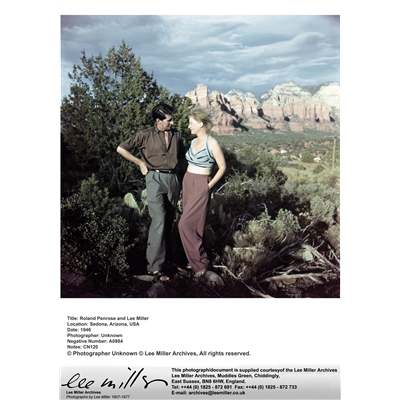 |
The story of Roland Penrose, British surrealist artist and biographer of Picasso and Lee Miller, the American surrealist photographer, who shot fashion and combat with equal talent as seen through the eyes of their son, Antony Penrose, who is also their biographer. We look at how their early lives formed their motivations and how they strove to use art to make the world a better place. The last decades of their life together were at Farley Farm, their home in Sussex which was frequented by many prominent Surrealist and Modern artists. |
|
| Wednesday, 24 March 2027 |
| The Life and Work of Thomas Chippendale |
| Janusz Karczewski-Slowikowski |
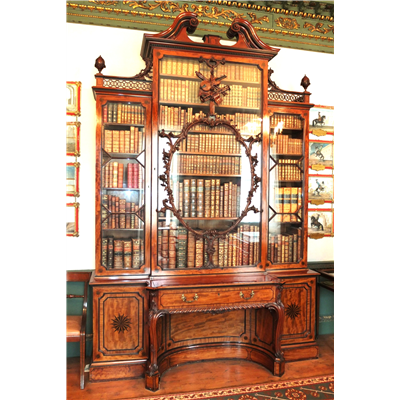 |
No cabinetmaker’s name is better known than Thomas Chippendale’s. This lecture examines the basis for his fame and concludes that he was to English Furniture what Shakespeare was to English Literature! It was Chippendale’s creative design talent together with his traditionally skilled craftsmanship which enabled him, through his cabinet making business, to design and produce some of the finest and most innovative examples of 18th century English furniture in the Rococo, ‘Chinese’, Gothic and Neo-Classic style, as this lecture will show. |
|
| Wednesday, 28 April 2027 |
| Antoni Gaudi I Cornet - Master Builder of Barcelona |
| Vivienne Lawes |
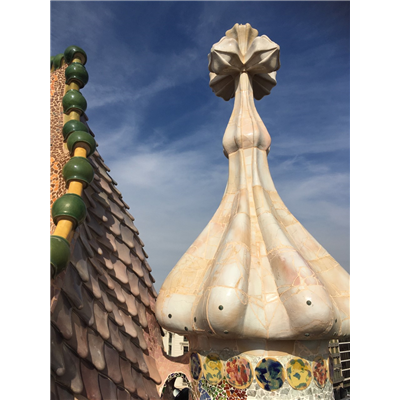 |
Genius Spanish Architect and designer Antoni Gaudi (1852-1926), a key figure in Catalan Modernism, stands as one of the creators of Barcelona’s urban identity. Inventor of new techniques and a magpie enthusiast of all things botanical and sacred. Gaudi’s most famous building, the Barcelona Church of the Sagrada Familia, is Spain’s most visited monument and one of seven of the architect’s works listed by UNESCO as a world heritage site. Building works were begun in 1882 and are still ongoing, a fact that stands in stark contrast to contemporary building projects and brings to life the nature of cathedral building in medieval Europe. |
|
| Wednesday, 26 May 2027 |
| Opium - Seduction, Greed, Art |
| Amanda Herries |
 |
The source of the stuff of dreams, the poppy is a beautiful fragile flower with immense power. Opium (from the Greek ‘opion’- poppy juice) is a hypnotic bringer of sleep, delightful lethargy and relief from pain. It is also highly addictive. Greed led to the introduction of this hugely desirable substance first to China and then to Europe. The beguiling seduction of its effects led to its use to quieten troubled minds and calm agitated children and babies. Its use - often by those with troubled minds - led to the creation of great works of art in music, art and literature. Social and art history meet as this lecture unfolds. |
|
| Wednesday, 23 June 2027 |
| Journey Across the Himalayas |
| Zara Fleming |
 |
This lecture will focus on the Buddhist areas of the highest mountain range in the world, the Himalayas. The once spiritual domain of Tibetan culture and religion, spanning 2,000 miles from Ladakh in the west to Bhutan in the east, it will explore the kingdoms and principalities of Ladakh, Zanskar, Spiti, Lahoul, Nepal, Mustang, Sikkim, Bhutan and their spiritual heartland of Tibet. Many of these countries lay on the ancient trade routes connecting India with Central Asia, and although isolated, became important centres of Buddhist art and culture, housing vast repositories of sacred art in their remote monasteries and temples. |
|